
Halafeel runs an AI generator for almost any naming or writing job — company names and baby names, cat names and D&D deities, taglines and study notes. This page is the curated way in: 32 text generators, grouped by the job you are trying to finish, each one run before it was listed.
Everything here is a text generator. You type a prompt, the tool returns words you can copy, edit and use.
How to use this page
- Start from the job, not the tool. The sections below are ordered by what you are trying to name or write, so find your situation first and pick from there.
- An empty prompt is a valid prompt. Leave the box blank and the tool runs its own random mode. Fill it in and you steer the output — that is almost always better.
- Treat the output as a first draft. Every tool here produces a starting point. The ones you keep are the ones you edit.
Names for people and characters
Naming a person is the hardest naming job there is, because the name has to survive being said out loud a thousand times. These generators work from culture, era and genre, so you get a name that fits the character instead of a name that merely sounds invented.
Practical tip: Put a constraint in the prompt box — a nationality, a decade, a vibe like “quiet and old-fashioned” — rather than leaving it empty.
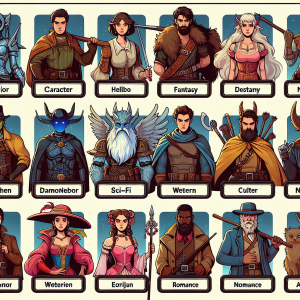 OC Name Generator
Original-character names that do not sound like a thousand other OCs.
 French Male Name Generator
French given names with the spelling and rhythm French speakers actually use.
 1800s Name Generator
Period-correct Victorian names for historical fiction and LARP.
 Baby Name Generator
Shortlists for a real baby of yours, filtered by style and sound.
Pet and animal names
A pet name gets used several times a day for the next decade, so it has to work when you are calling across a park — and it has to be short enough that you will actually finish saying it.
Practical tip: Two syllables with a hard consonant tends to travel best outdoors. Names ending in an “-ee” sound are easy for animals to pick out of background noise.
 Cute Pet Name Generator
Short, soft names that suit small animals and small apartments.
 Boy Dog Name Generator
Male dog names that hold up past puppyhood.
 Girl Cat Name Generator
Female cat names, including the ones shelters will not stop reusing.
 Wolf Name Generator
Wolf names for roleplay, fiction and the occasional ambitious husky.
Brands, shops and product names
Commercial naming has two failure modes: names nobody can spell over the phone, and names that are already taken. These tools generate candidates. Screening them is a separate job, so we link our clearance guide below rather than pretend a generator can do that part for you.
Practical tip: Generate ten to fifteen candidates, say each one out loud, then cut. Reading aloud catches more problems than reading on a screen.
 Business Name Generator
Company names screened for spelling, sound and how they read aloud.
 Software Name Generator
Product and SaaS names that avoid the obvious first choices.
 Funny Shop Name Generator
Shop and store names built on wordplay, for sellers who would rather be memorable than formal.
 AI Business Name Generator
Same job as above, run in the AI tool mode for longer candidate lists.
Writing and storytelling
These are drafting tools, not ghostwriters. They are most useful when you already know roughly what you want and need something concrete to react to — a premise, a plot skeleton, an opening scene.
Practical tip: Feed it your own detail (“a lighthouse keeper who stopped trusting the sea”) and the output gets dramatically more specific.
 AI Story Generator
A short story built from a single line of premise.
 AI Plot Generator
Plot skeletons with a hook, a turn and an ending that lands.
 Fanfiction Generator
Scenes and openings written to match an existing fandom.
 Book Idea Generator
Premise-plus-audience ideas you can actually outline from.
Poems, lyrics and wordplay
Short-form language tools. Useful for cards, speeches, song sketches and classroom exercises — the places where you need a starting shape rather than a finished piece.
Practical tip: A poem generated from your own theme or memory reads far better than one generated from nothing.
 Haiku Generator
Three-line haiku that keep the 5-7-5 syllable shape.
 Limerick Generator
Five-line limericks with the rhythm and the punchline in the right places.
 Love Poem Generator
Verses for cards, weddings and anniversaries.
 Rhyme Word Generator
Find rhymes without opening a tab full of ads.
Games, tabletop and fandom
Tabletop and fandom naming is a volume problem — a Dungeon Master needs fifty names before Friday. These tools are built for that. The 5e boss generator returns a complete stat block rather than a paragraph of flavour text.
Practical tip: The D&D tools assume 5th-edition conventions. Read any stat block before it reaches the table.
 D&D 5e Boss Generator
A full stat block — armour class, hit points, saves, actions — ready to run.
 D&D Deity Generator
Gods with domains, titles and a usable dogma.
 Fantasy Race Generator
Playable species with traits and cultural notes.
 Witcher Name Generator
Names in the Witcher’s Slavic and Elder Speech register.
Marketing, social and SEO copy
Copy that has to fit somewhere: a hashtag set that stays on topic, an opening email that survives a crowded inbox, a page outline that has to carry its own argument. These tools generate to the constraint rather than around it.
Practical tip: Paste your real product or page content in, not a one-line description. The output inherits your specifics.
 Hashtag Generator
Relevant hashtag sets per platform, without the spam pile.
 Cold Email Generator
First-touch emails with a subject line and one clear ask.
 Landing Page Generator
A page outline — hero, proof, objections, call to action — with the copy.
 Email Reply Generator
Polite replies to awkward, vague or urgent messages.
Study, work and everyday text
Text utilities for notes, revision, references and the small writing jobs that fill a working day.
Practical tip: Anything a study tool returns is a starting structure. Rewriting it in your own words is how you actually learn the material.
 Summary Generator
Condense notes, articles or transcripts into their key points.
 Study Guide Generator
Turns a topic into concepts, stages and self-test questions.
 Quiz Generator
Practice questions with answers, from any topic you name.
 Word Generator
A single interesting word for when one specific word is missing.
Every generator above links to its own page, where the tool sits above worked examples and related tools. Browse the full generator library if you cannot find the one you need.
How this page is put together
- Selection. A tool is listed only if its output is text you can use: a name, a draft, a set of copy, a study structure. Tools that mainly return an image, a sound or a pointer to an option are excluded, however popular they are.
- Testing. Every tool on this page was called through Halafeel’s own generator endpoint with an empty prompt before it was listed, and had to come back with usable text on that run.
- Maintenance. If a tool breaks, degrades or starts reproducing existing text instead of generating it, it comes off the list. The Sonnet Generator was removed on exactly that basis.